
Ferret Litter Training: Fast Setup, Cues & Reinforcement
ferret litter training
Introduction
Litter training a ferret often looks harder than it truly is. What feels like a housewide game of cleanup is usually a mismatch between the animal’s instincts and the environment we set up. When the setup, timing, and rewards line up with how ferrets actually behave, progress can be surprisingly quick. The aim here is not to rely on luck but to put a simple behavioral framework to work—one that respects routine, corner preferences, and the power of well‑timed reinforcement.
This article takes a practical, research‑aware approach. It begins with the rhythms that govern elimination, moves through a room‑by‑room setup, then explains how to capture correct choices and turn them into a habit that holds up in new spaces and under mild stress. The tone is intentionally calm and precise, because reliable training comes from small actions done consistently, not dramatic fixes.
Why ferrets miss—and how that helps you
Ferrets eliminate frequently, especially soon after waking, eating, or an exciting play burst. They also have a strong tendency to back into corners; those angles feel safe because the animal can guard its front while the rear is protected. From a learning standpoint, repetition in steady conditions builds habit circuits in the brain, which is why predictable routines matter so much. In short, if you can anticipate wake‑ups and identify preferred corners, you already have the two best clues for a fast training plan.
Three implications follow:
- Timing is leverage: escort to the box right after sleep and meals.
- Corners are magnets: assume the ferret will pick one unless a box is there.
- Consistency speeds habit formation: identical cues paired with the same outcome produce automatic behavior.
Build an environment that does the teaching
Good environments remove most of the opportunities for error. Think of the room as the first trainer.
- Litter box design: Choose a box with a high back and a low front lip so backing up feels natural and entry is effortless. The interior should allow a comfortable turn; cramped boxes signal “avoid me.”
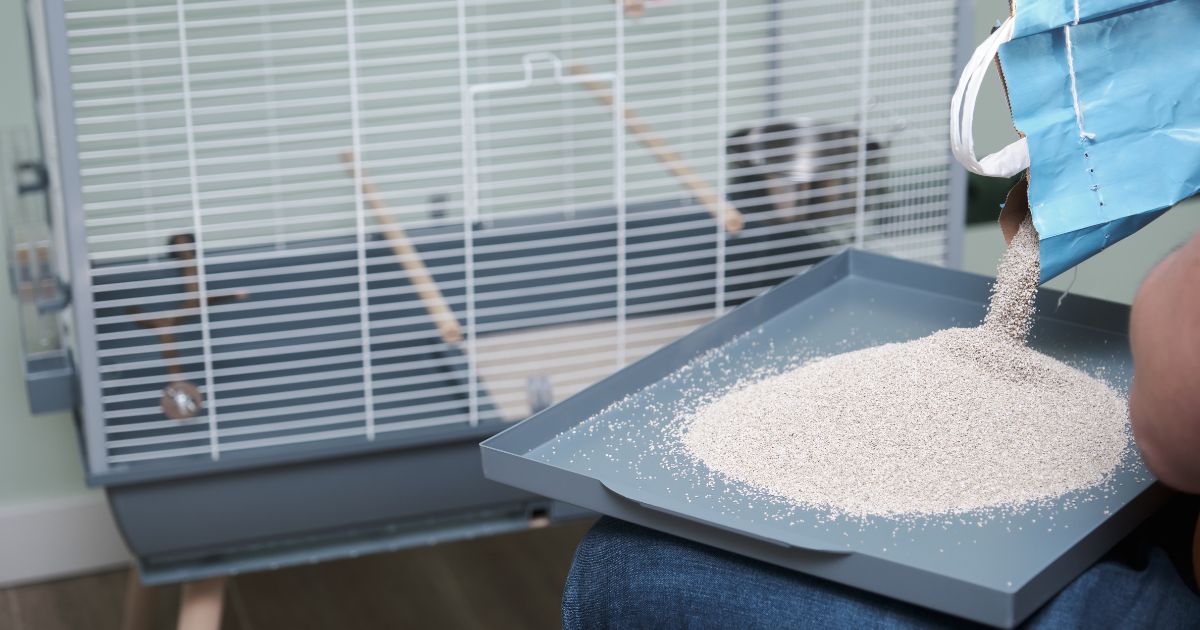
- Litter material: Use unscented paper pellets, wood stove pellets, or aspen shavings. Skip clumping clay and silica; besides dust, they can be risky if ingested. Unscented options respect a ferret’s sensitive nose.
- Placement: Put a box in every corner of the primary enclosure. In play spaces, seed multiple corners you already see the ferret investigate. Keep boxes away from food, water, and bedding; ferrets maintain clean zones and will bypass boxes that violate those boundaries.
- Olfactory cues: Leaving one small fecal piece in a clean box functions like a signpost that says, “This is the toilet.” Do not let the box get dirty—just one small cue is enough.
- Hygiene: Scoop solids daily and replace litter every two to three days, washing the pan with mild, unscented soap. A dirty box triggers relocation to a fresh corner.
Phase 1: Fast start with guidance and instant payoffs
The early window is about stacking the odds in favor of success and rewarding those successes with perfect timing.
- Confinement that teaches: Begin in a large cage or one thoroughly ferret‑proofed room. Fewer available corners make it far easier to stumble on the correct option—the box.
- Watch for cues: Nose‑down sniffing, sudden cornering, backing, or a quick tail lift usually precede elimination. When you see it, carry or gently guide the ferret to the nearest box.
- Immediate reinforcement: The moment elimination happens in the box, deliver warm praise plus a tiny, high‑value treat—often a lick of salmon oil, a pea‑sized paste, or a small bit of cooked meat. Early on, reward every success; the combination of certainty and speed teaches fastest.
- Shaping for hesitant learners: If the ferret stalls at the rim, mark and reward steps toward the target—approach, two paws in, all paws in, then elimination. This graded path keeps momentum without pressure.
- Light verbal cueing: Pair a short cue like “box” when placing the ferret in the pan and during elimination. Over repetitions, the word becomes informative without adding stress.
Phase 2: Broaden the world without losing the habit
Once box use is reliable in the starter space, begin exporting the habit across rooms.
- Add rooms gradually: Open one new area at a time, pre‑seeding obvious corners with boxes. Supervise closely for the first few sessions; respond to cues exactly as in Phase 1. The goal is for the ferret to discover that “the rule travels.”
- Transition reinforcement wisely: Shift from rewarding every success to rewarding some successes unpredictably. This “sometimes” pattern keeps motivation high and makes the habit durable. Maintain low‑key praise for all correct uses to keep the social signal steady.
- Strengthen the whole sequence: Occasionally reward the chain—orienting to the box, stepping in, eliminating, then exiting calmly. Treating the routine as a single unit helps it survive small disruptions.
- Trim box density slowly: Start with more boxes than you plan to keep. After a clean two‑week stretch, remove one box at a time, watching for drift. If accuracy slips, restore the last removed box and give it a few more days.
Troubleshooting without blame
Mistakes are diagnostic. Treat them as a question: “What made the right choice hard just now?”
- Proximity: Was a box within a few steps when the urge hit?
- Cleanliness: Was the last-used box fresh, or did odor push the ferret elsewhere?
- Health: Sudden frequency, straining, or discomfort warrants a veterinary check.
- Novelty and stress: New rooms, surfaces, visitors, or noises can disrupt routines.
Clean accidents with an enzymatic product so residual scent doesn’t mark that spot as a bathroom. Avoid punishment. Scolding or startling does not teach location; it teaches secrecy and can make the ferret avoid you right when you need to guide them. Instead, return to closer supervision and a few days of dense reinforcement to reset the habit.
Routines that make consistency easy
Habits thrive on rhythm. Begin and end free‑roam with a calm “box visit.” Align play blocks with known high‑probability windows after sleep and meals. For a week, jot quick notes—time, room, outcome. Even a short log reveals patterns like, “misses happen only in the hallway after 8 p.m.,” which is a placement problem, not a training failure.
Motivation and welfare
Training quality tracks welfare. Keep cleaning products unscented. Handle calmly, especially during cue interception. Rotate reinforcers so novelty stays on your side; over time, praise and routine carry more of the load while tangible treats become occasional.
Readiness signals for expansion
- A full week without accidents in the starter space.
- Quick, calm response to pre‑potty cues with minimal prompting.
- Reliable box use in at least two rooms under a “sometimes” reward schedule.
Frequent owner pitfalls
- Expanding territory faster than the behavior can generalize.
- Relying on a single box in a multi‑room layout.
- Letting the box become dirty and mislabeling the result as stubbornness.
- Punishing accidents that erode trust and delay progress.
A compact checklist
- Seed boxes in likely corners; keep food, water, and bedding separate.
- Prime one box with a tiny fecal cue; keep all boxes otherwise clean.
- Escort after wake‑ups and meals; reward success immediately.
- Start with “reward every time,” then move to “reward some times.”
- Clean accidents enzymatically; never punish.
- Add rooms one at a time; pre‑place boxes.
- Reduce box count only after two clean weeks.
Conclusion
Rapid ferret litter training rests on three pillars: a room layout that channels corner instincts, reinforcement that happens right when the correct behavior occurs, and careful generalization that carries the habit from one space to the next. Most of the work happens early, in the details—fresh litter, boxes where corners tempt, soft cueing, and quick rewards. Do those consistently, and the routine becomes self‑sustaining. You end up with fewer messes, a smoother household rhythm, and an animal that trusts your guidance because it has always paid off.
Q&A
- Q: How many litter boxes should I start with?
A: Place a box in each corner of the initial enclosure and several in the first play area’s corners. Begin with more than you intend to keep; after two clean weeks, remove boxes gradually while watching accuracy. - Q: My ferret pees in one box and poops in another. Is that a problem?
A: It’s common and acceptable as long as both boxes stay clean. Once the routine is stable, you can attempt gentle consolidation, provided accuracy remains high. - Q: When can I switch from treats to praise only?
A: After three to five days of consistent success, start rewarding unpredictably—some correct uses earn a treat, all earn calm praise. If performance dips, briefly return to rewarding every success. - Q: One hallway corner keeps getting “chosen.” What should I do?
A: Place a box precisely in that corner, clean the floor enzymatically, and reinforce correct uses there for several days. When stable, slide the box a little each day toward your preferred permanent spot. - Q: Are pads a good alternative to boxes?
A: Pads can be a short‑term target in tight spaces, but many ferrets shred them. If you use pads, tape them down and position a box beside the pad. Gradually move the pad into the box to complete the transition.